
Web development
B2B website design, connected to the operation you already run
We build it and then we run it: forms that land where you work, content you can change without calling us, and someone who answers when something breaks.
The problem
When your site doesn't talk to anything you use daily
It usually goes the same way. The site was built once, it looked good, and it has lived on its own ever since: form submissions land in an inbox nobody reads, changing a paragraph means emailing somebody, and nothing tells you it broke until a customer does.
That isn't a design problem. The site was built as a standalone piece, without asking where the data had to end up or who would own it after launch.
Leads go nowhere
Someone fills in the form and that record never reaches a place where anyone can follow up.
Every change goes through a queue
A two-line fix waits on someone else's backlog.
Nobody owns it
Whoever designed it doesn't maintain it, and whoever maintains it doesn't know why it was built that way.
What we build
What we build
A corporate site isn't defined by how many pages it has, but by what it has to solve. Same method for a small business and a multi-site company. These are the four situations most companies arrive with.
Situation 1
A site that brings conversations, not just visits
People arrive and nothing happens with them.
See what we doWhat we do with your leads
- The site is built around what you want to happen
- Forms land in the system your team works in, tagged with where they came from
- Content sits in an admin you can use yourself
Situation 2
Online stores connected to your systems
Selling online is easy until the second order.
See what we doWhat we do with your store
- Inventory, payment reconciliation, invoicing and fulfillment from the start
- It connects to the ERP, POS or spreadsheet your operation already runs on
- The customer can tell where the order is
Situation 3
WordPress when it has to hold users and data
The site stops being informational and starts operating.
See what we doWhat we do with WordPress
- Users logging in, gated content, training and payments
- We build the missing modules without freezing the site
- Email, forms, participation, events, certificates and assessments
Situation 4
You already have a site and it isn't working
Starting over isn't always the answer.
See what we doWhat we do with what you have
- We look first at what's worth keeping: domain, ranking content, working integrations
- If the current URLs are indexed and bringing traffic, they get redirected
- Rebuilding everything when half of it was fine is the expensive way to fix it
At the center
Your site
All four end up in the same place: the site that connects to your operation.
A site that brings conversations
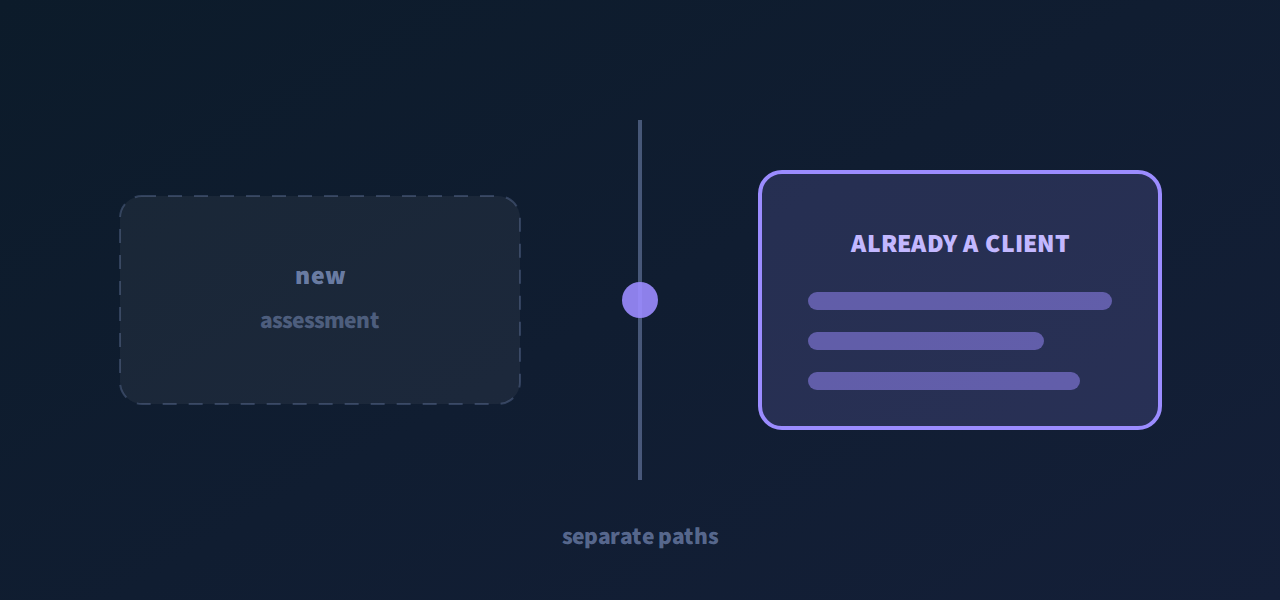
Forms don't stop at a shared inbox: they land in the system your team follows up in, tagged with where they came from.
Online store connected
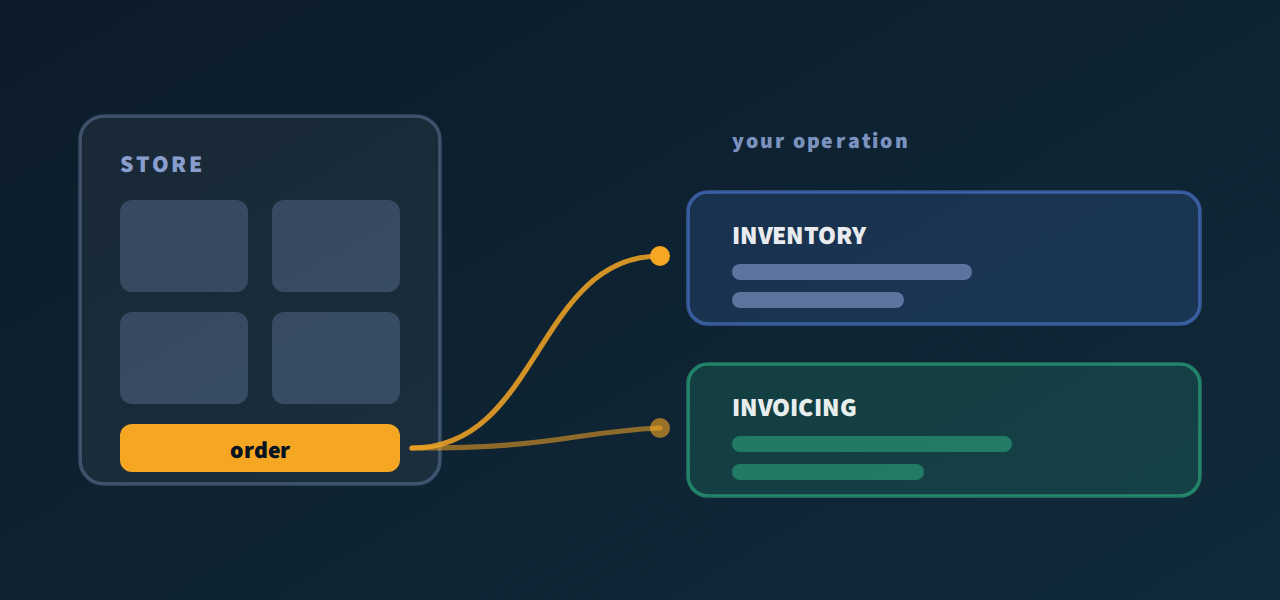
Inventory, payment reconciliation, invoicing and fulfillment: the part that shows up after the second order.
WordPress that operates
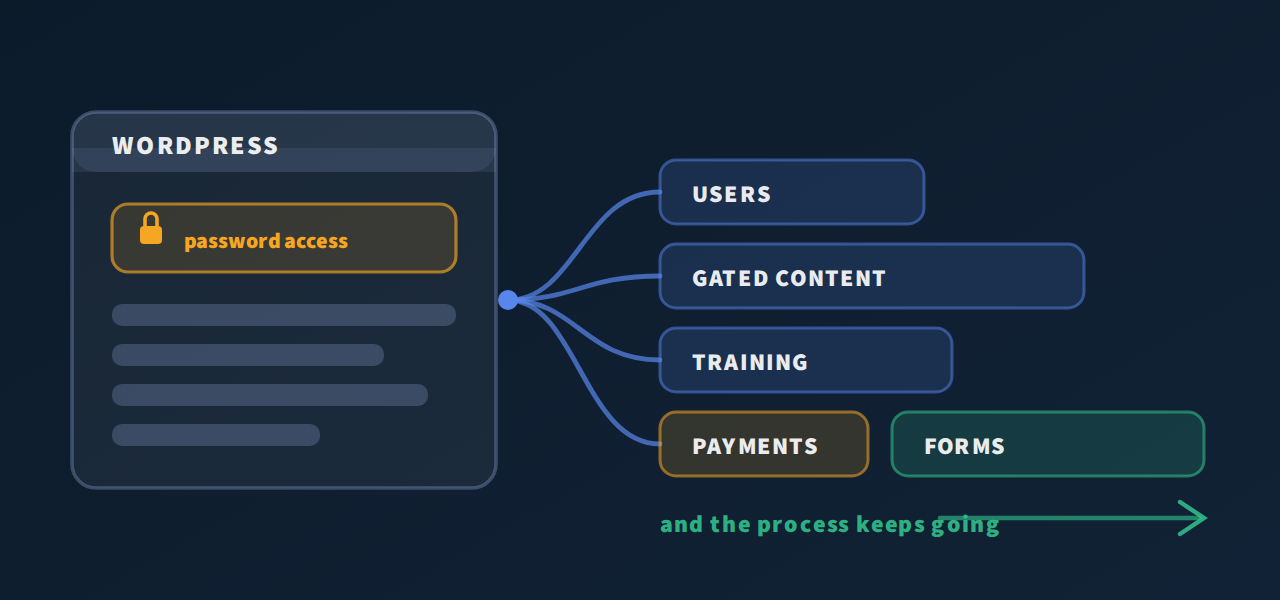
WordPress development: users, gated content, training, payments and forms feeding a process.
Redesign without losing ground
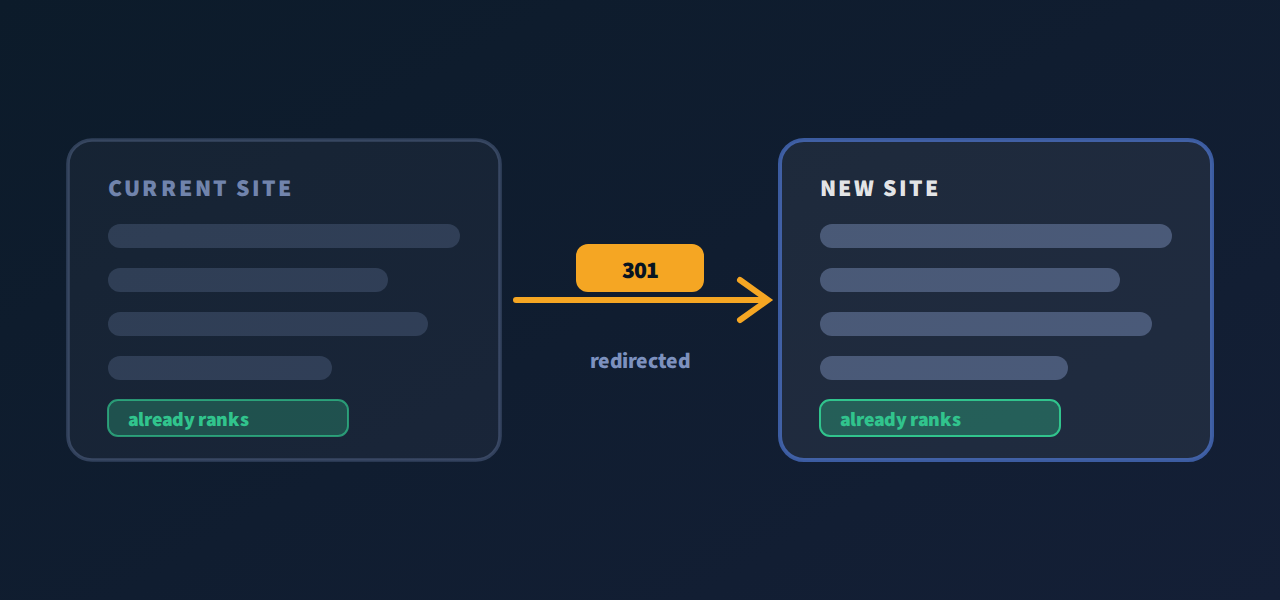
What already ranks is kept, and indexed URLs are redirected so you don't lose what you had earned.
Sound familiar? Tell us what you need.
If what you need is a portal with roles and permissions — closer to an application than to a site — that's a different conversation, and it lives in software development.
Pricing
What drives the price of a business website
We don't quote before we understand the scope. What we can tell you today is what moves it.
| Factor | What raises it | What lowers it |
|---|---|---|
| Scope | Many templates; old content migrated by hand | A few templates reused across the site |
| Integrations | An ERP, POS or billing system with no open data | Forms landing in one system to start |
| Online store | Inventory, shipping and billing from day one | Catalogue and checkout first, rest later |
| Content | We write, translate and build it | You hand it over ready |
| Running it after launch | Continuous support, improvements, monitoring | One-off delivery (rarely a good idea) |
The assessment ends in a written quote: scope, phases and timelines. Book a free assessment.
Evidence
See what we built, running today
No mockups. Everything below is in operation right now.
- Cardreen. Our own commercial capture product. We built it, we run it, and we use it every day.
- PMS Core. Our own management and operations system, running real projects, tasks and follow-up inside DSC.
- The digital ecosystem of an international medical congress. Site, registrations, content and operations connected — working during the event and after it.
Nearshore
Working with a remote team that builds and runs it
We work remotely, from Colombia, and we plan around your business hours instead of ours. Three things are worth knowing before you start.
Your working day is the one we work to
Our hours are set to overlap with yours, so a question asked in your morning gets an answer in your morning — not the next one. We don't claim to sit in your time zone; we claim to be available inside your day.
One team, not a chain of vendors
You're not coordinating a designer, a developer, a host and an agency. The people who build the site are the people who answer afterwards.
Everything is written down
Decisions, access and maintenance are documented as we go, so handover never depends on one person's memory.
We don't have a US office, and we're not going to pretend otherwise. What we bring is the team that builds it and stays.
Fit
When this is a fit — and when it isn't
This fits if
You already have an operation — customers, orders, users — and the site has to connect to it.
This fits if
You want to change day-to-day content yourself, without waiting on anyone.
This fits if
You want someone still answering after launch.
This doesn't fit if
You want a one-page brochure that connects to nothing.
This doesn't fit if
You need a portal with roles and permissions — that's software development.
This doesn't fit if
You're choosing on lowest price rather than on a written scope.
The differentiator
Why the team that builds it is the team that runs it
Frequently asked questions
Frequently asked questions
Can we manage the site ourselves?
Yes, and that's what we recommend for day-to-day content: text, images, posts, new pages. You get your own access and a walkthrough of how it works. What's worth leaving with us is the part that can break quietly: integrations, forms, updates and backups.
What happens after launch?
There's still someone there. The site keeps monitoring, updates and a single channel to report issues, with a named owner on our side. Response times are agreed in writing in the proposal, according to what the site supports.
How that stage works: application support.
Closing
Let's talk about your site
Tell us what you have today and what it has to do. We'll look at whether it's worth keeping, rebuilding, or whether the problem isn't the site at all — and we'll tell you which of the three it is.
Not sure what you need yet? Start with a free assessment.