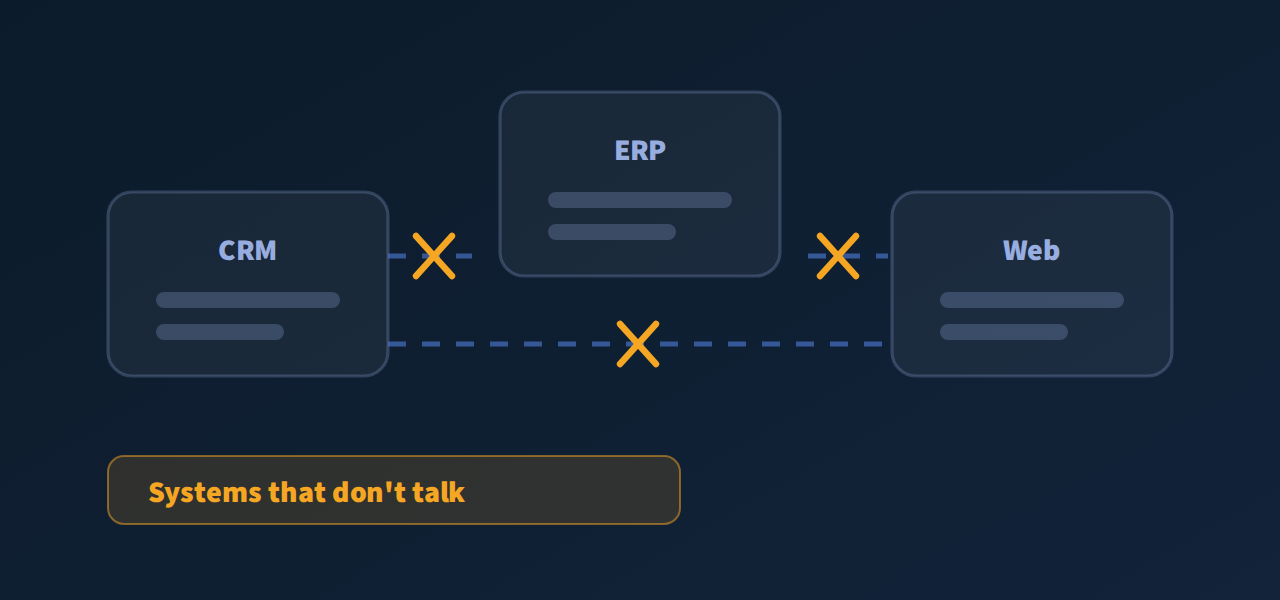
Systems that don't talk
Every tool works. What doesn't work is the space between them — and that's where the time goes.

Free assessment
We look at your systems, your data and how your operation actually runs — not how it looks online. It's reviewed by the person who builds and runs these systems. No cost, no commitment.
No cost, no commitment. A few questions about how you operate.
What we usually find
Every tool works. What doesn't work is the space between them — and that's where the time goes.
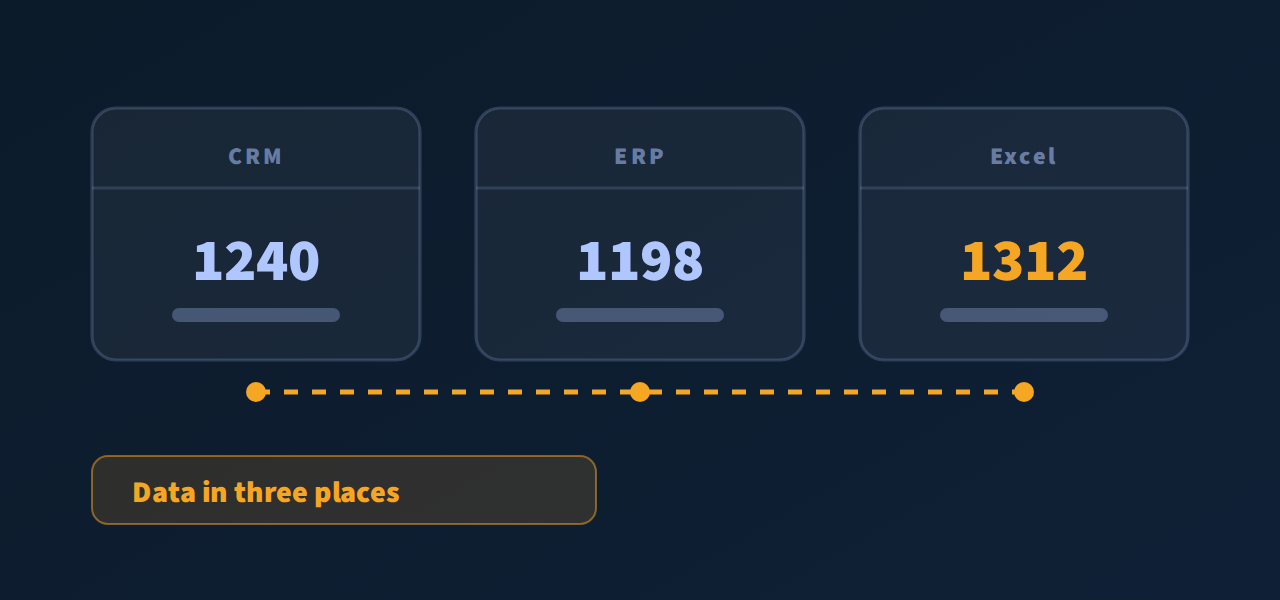
When the same number lives in three systems, none of them is trusted, and decisions wait.
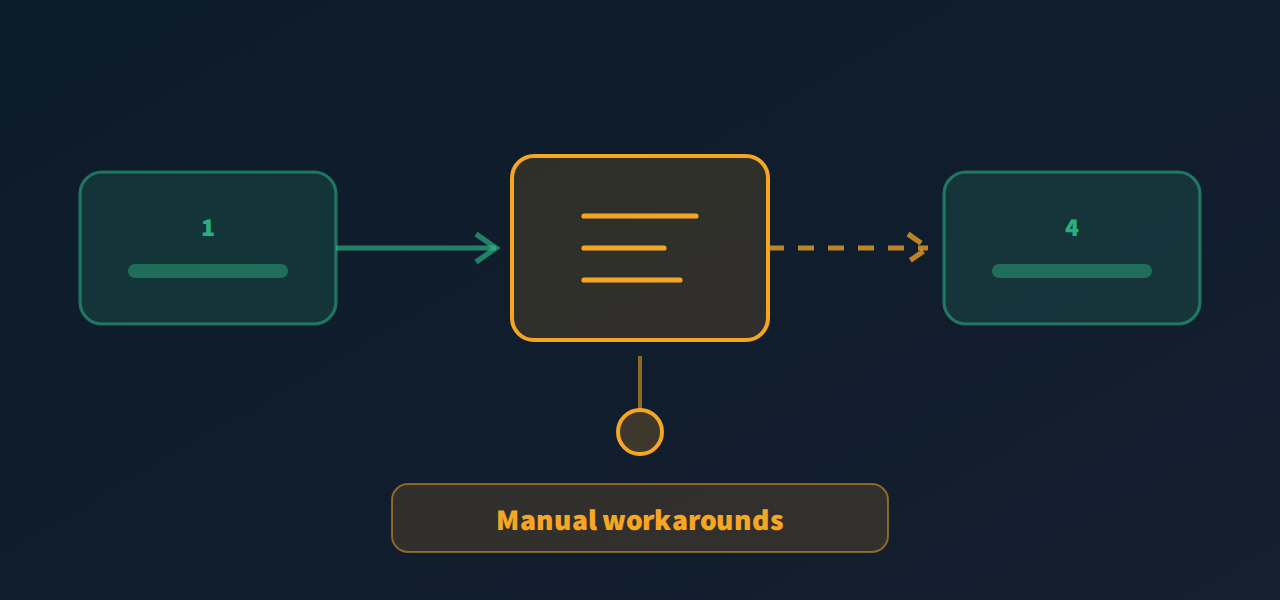
It started as a temporary fix and became the process — as long as that person is there.
What you get
Not a list of problems. A prioritized plan: what's holding your operation back today, what to fix first, and why that one before the others.
It's rarely where it hurts. It hurts in the team rebuilding a report by hand every week; it lives in two systems that were never connected, and in the person who became the bridge between them. That's what we look for: where the operation stalls, not the symptom.
The space between your tools
This is where the time actually goes. Every tool works. What doesn't work is the space between them.
Someone exports a file every Monday. Someone else pastes it somewhere. It started as a temporary fix and nobody has questioned it since, because it works — as long as that person is there.
When the same number lives in three systems, none of them is trusted. Decisions wait for someone to reconcile the data by hand, and by the time the report is ready the decision has already been made without it.
What we look at
Which systems you use, what data they produce, who moves that data between them, and where a person is doing work a system should be doing.
The process
A few questions about your operation, your systems and where the friction shows up.
We look at what you told us, and ask to see things from the inside if we need to.
What we found, what order we'd fix it in, and why. If that turns into a proposal, scope and terms are in writing before anything starts.
No cost, no commitment. A few questions about how you operate.
Who does it
Your assessment isn't run by a sales rep. It's run by the person who builds and runs the systems you see on this site. That's why what you get is a plan of work, not a quote.
It also means the conversation is short and technical. You don't have to explain your problem to someone who then explains it to an engineer.
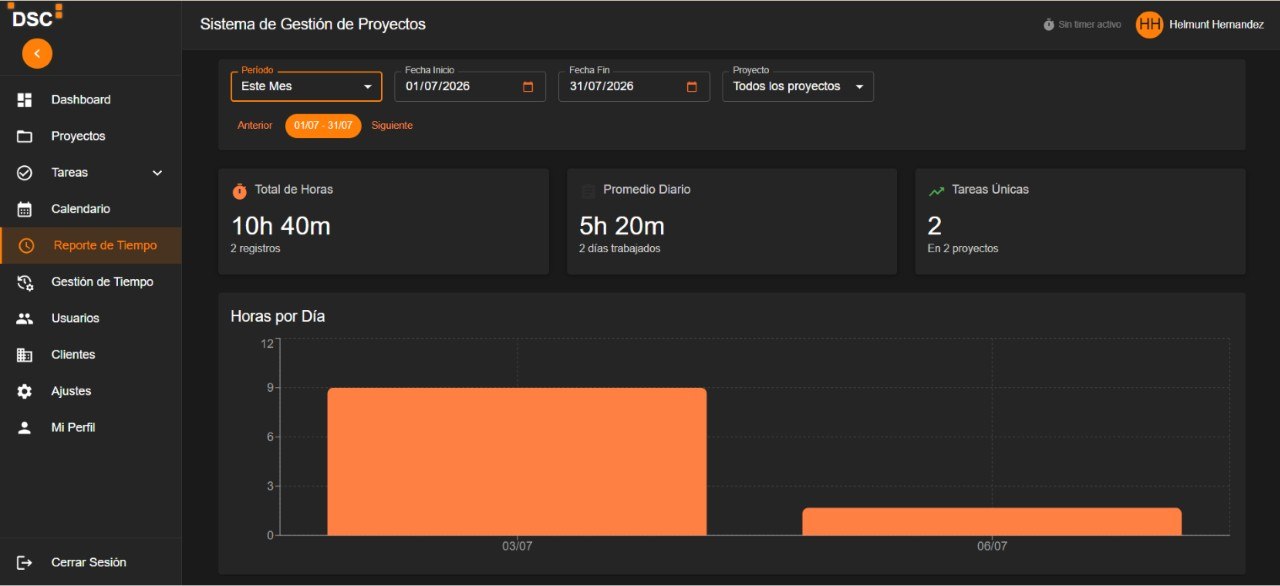
PMS Core, the system we run our own work on. We built it and we operate it every day.
What this is not
We don't inventory your laptops, review your firewall rules or check your license renewals. Plenty of managed service providers do that well, and if that's what you need, that's who you should call.
What we look at is how your business systems work together: integrations, data flows, and the manual work that grew around them.
Want to see how we work first? See the systems we built — and still run today.
Common questions
A review of how your operation works underneath: systems, data, integrations and process. What you get back is a prioritized plan of work, not a marketing report.
We look at what you already have running, find where it stalls, and tell you what we'd do and in what order. If something falls outside what we do, we say so.
It depends on the size of your operation and how many systems are involved. We tell you the actual timeline once we see what you have — not before.
Nothing automatic. If the assessment turns into work with us, we talk about it. If it doesn't, the plan is yours either way.
Start here
If your operation is already running and you want to know what's slowing it down, it starts with a few questions. If you're starting from scratch, there are simpler and cheaper options than us — and we'll tell you so.
No cost, no commitment. A few questions about how you operate.