Development
We build the software your operations actually need
We build it, we connect it, and we keep operating it. Your system doesn't lose its owner on delivery day.
The breaking point
When off-the-shelf software stops fitting your operation
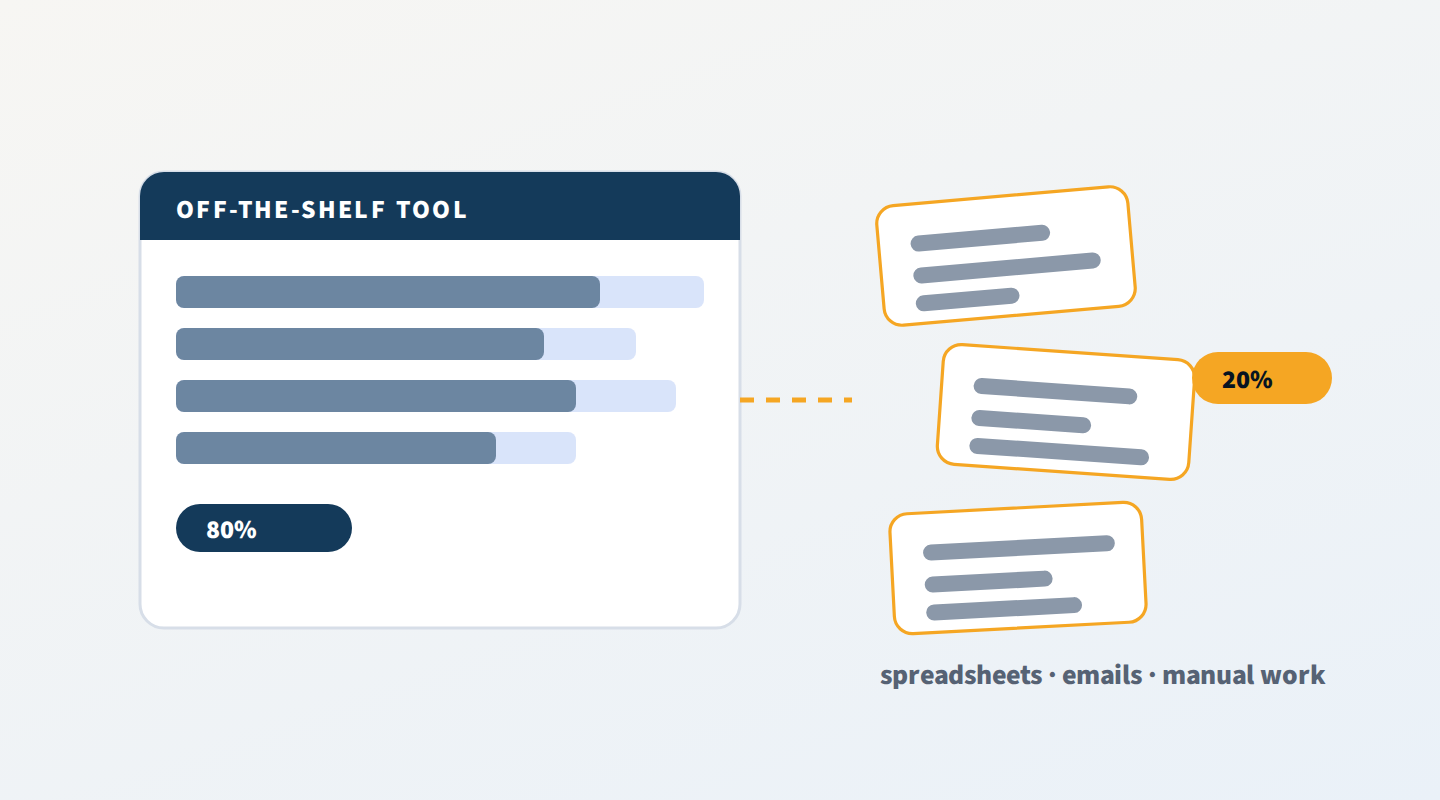
It usually starts the same way: a platform that covered 80% of the process, and a 20% gap patched with spreadsheets, email threads and manual work. That gap is what eventually slows the whole operation down.
Custom isn't the answer to everything. It earns its place when the process that differentiates you is the one no product respects, when several systems need to talk without a person in the middle, or when every new seat costs more than the functionality it adds.
The 20% that doesn't fit
What the platform doesn't cover ends up in spreadsheets and email threads.
Systems that don't talk
Someone copies and pastes between platforms every single day.
Seats that keep adding up
Every new seat costs more than the functionality it adds.
What we do
What we can build for your operation
Custom software
Systems built around the process that makes you different: internal operations, commercial workflows, information control, everything that lives in spreadsheets today.
Web and mobile applications
Platforms, portals and apps with real users, roles and permissions, built to grow instead of being rebuilt: client portals, intranets, information systems.
For the mobile side, that's what we do in mobile app development.
Platforms and portals
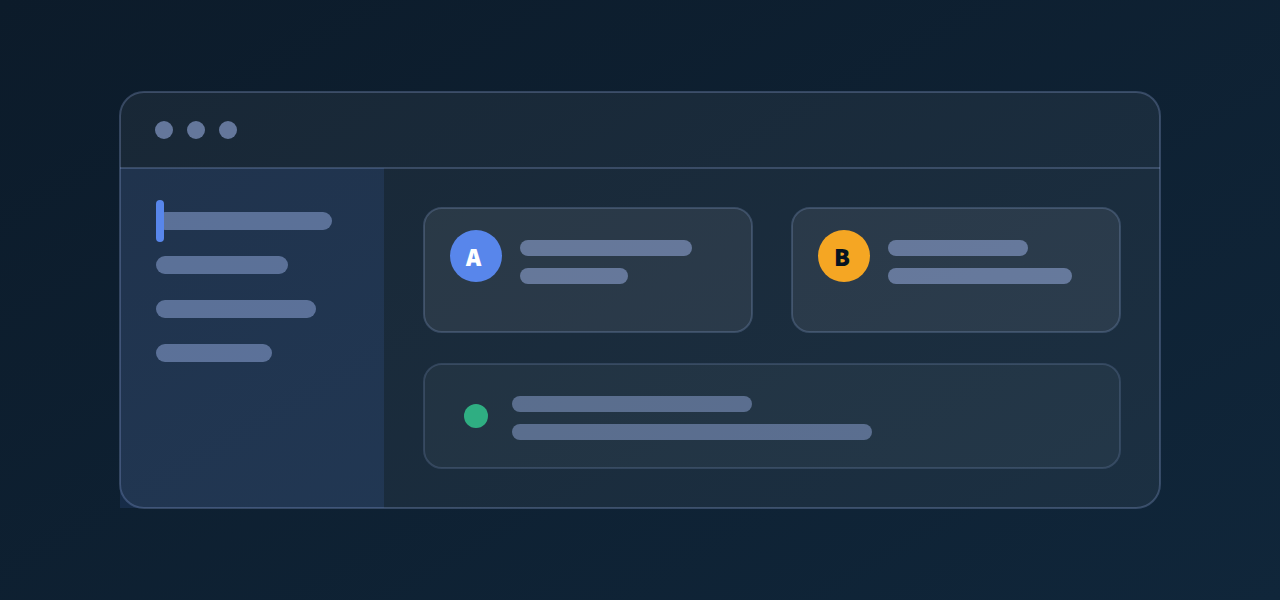
Multi-user environments where your team, your clients and your data meet, with the integrations that keep them in sync.
get the platform we build found
If what you need is the company website itself — the one that brings in conversations and connects to what you already use — that's what we do in B2B website design.
Evidence
Systems we built that are running today
Cardreen
Our own commercial capture product. We built it, we run it, and we use it: proof that we can take a product from idea to market.
PMS Core
Our own management and operations system, running real projects, tasks and follow-up inside DSC.
Our WordPress modules
Email, forms, events, certificates and assessments, integrated with client operations. This is how we build custom WordPress plugins, and when the weight is in the system intelligence, custom software with AI.
Each one proves a specific capability: product, data operations and integration.
Legacy systems
Modernizing the systems you already run
Rebuilding everything from scratch
Not everything needs to be rebuilt. Stopping the business to reconstruct what still supports the operation is the expensive way to solve it.
Modernizing it incrementally
When a system still supports the operation but is expensive to maintain, hard to integrate or carries security risk, the right move is usually incremental: expose its data through APIs, rewrite what hurts most, and leave alone what works.
We assess it with one question: over three years, what costs more — keeping it or replacing it?
How we work
AI development, applied to real workflows
We build AI into systems where it changes the economics of a process: document handling, classification, follow-up, support, reporting. Not a chatbot bolted onto a website.
We also use AI agents inside our own development process to research, document and test faster. Architecture and data decisions stay with a person who signs their name to them.
Technical judgment
How we choose your stack
We don't sell a technology because it's fashionable. We choose based on what the process needs, what it must integrate with, who maintains it afterwards, what budget sustains it and where the business is heading.
Criterion 1
What the process needs
Technology is chosen after understanding the flow, never before.
See detailWhat the process needs
- What is done by hand today
- Which rules admit no exception
- What real volume it handles
Criterion 2
What it must integrate with
A system that doesn't talk to what you already run is born isolated.
See detailWhat it must integrate with
- Available APIs
- Data that has to migrate
- Channels that depend on it
Criterion 3
Who maintains it afterwards
Choosing something nobody can sustain is mortgaging the project.
See detailWho maintains it afterwards
- Your team or DSC
- The real learning curve
- Three-year support cost
Criteria 4 and 5
Budget and where the business is heading
The best stack is the one you can operate for years, not the newest one.
See detailBudget and horizon
- What sustains the project today
- What it needs in two years
- What can ship in phases
Investment
What custom software really costs
There's no list price, and anyone who quotes before understanding your process is guessing. What moves cost and timeline is concrete: how many processes are involved, how many systems must be integrated, how many user types and permissions exist, how much data has to migrate, and whether you need a first working version soon or the complete solution.
That is why we start with an assessment: to put a number on the real scope before you make an investment decision.
The next step
Building is the first step
Connect it
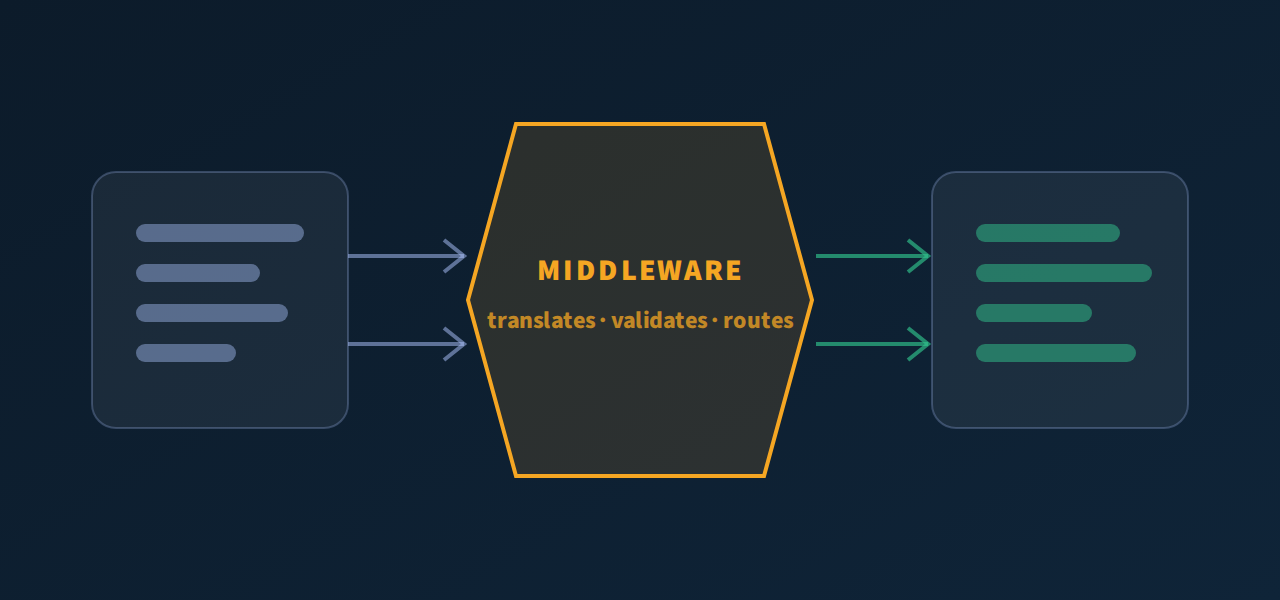
A new system that doesn't talk to what you already run leaves you as disconnected as before — that's what we solve in systems integration.
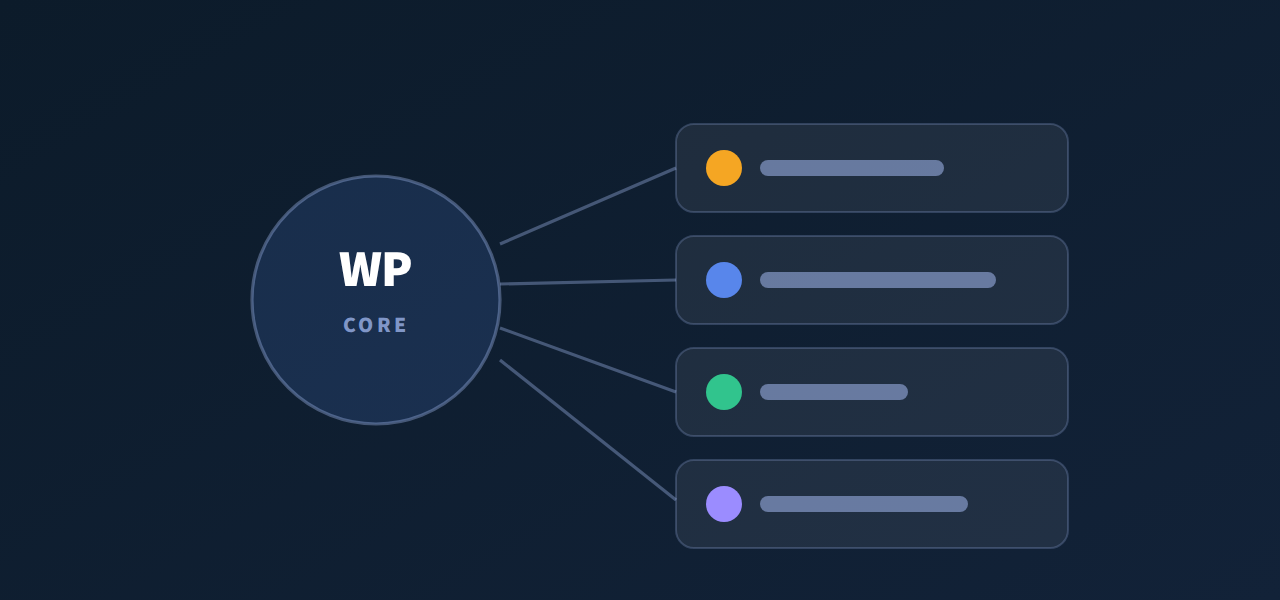
And if what you need is engineers inside your own team rather than a project delivered, that's staff augmentation.
Free assessment
Tell us what you need to build
If you're evaluating a custom build, the free assessment is the cheapest way to find out whether it's worth it. We review your operation, your systems and your data, and tell you what to build, what to integrate and what you don't need at all.
Frequently asked questions
What clients ask before we build
Does DSC only build software?
No. We build, but we also integrate systems, drive growth and run the ecosystem after delivery. Development is the foundation; the value shows up when that foundation is connected and kept alive.
How long does a custom build take?
It depends on scope, which is why we do not quote a timeline before knowing it. What we can tell you in the assessment is what can ship first so you start using it, and what can wait.