Step 1 · Build
Creates or improves digital assets.
Build
Apps, websites, software and systems
The base everything else connects to.
Connect · Digital integration services
DSC delivers digital integration services that connect your data, workflows and channels, so your operation stops depending on manual work and incomplete information.
We build, connect, grow and operate the ecosystem so technology, data, marketing, support and operations work from a reliable base.
Organizations often grow by adding tools: website, app, forms, databases, support, email, messaging and reports. The problem starts when every piece stores information separately and the team ends up working with copies, exports or incomplete decisions.
Premium integration does not start with an API: it starts when the business can trust the full workflow.
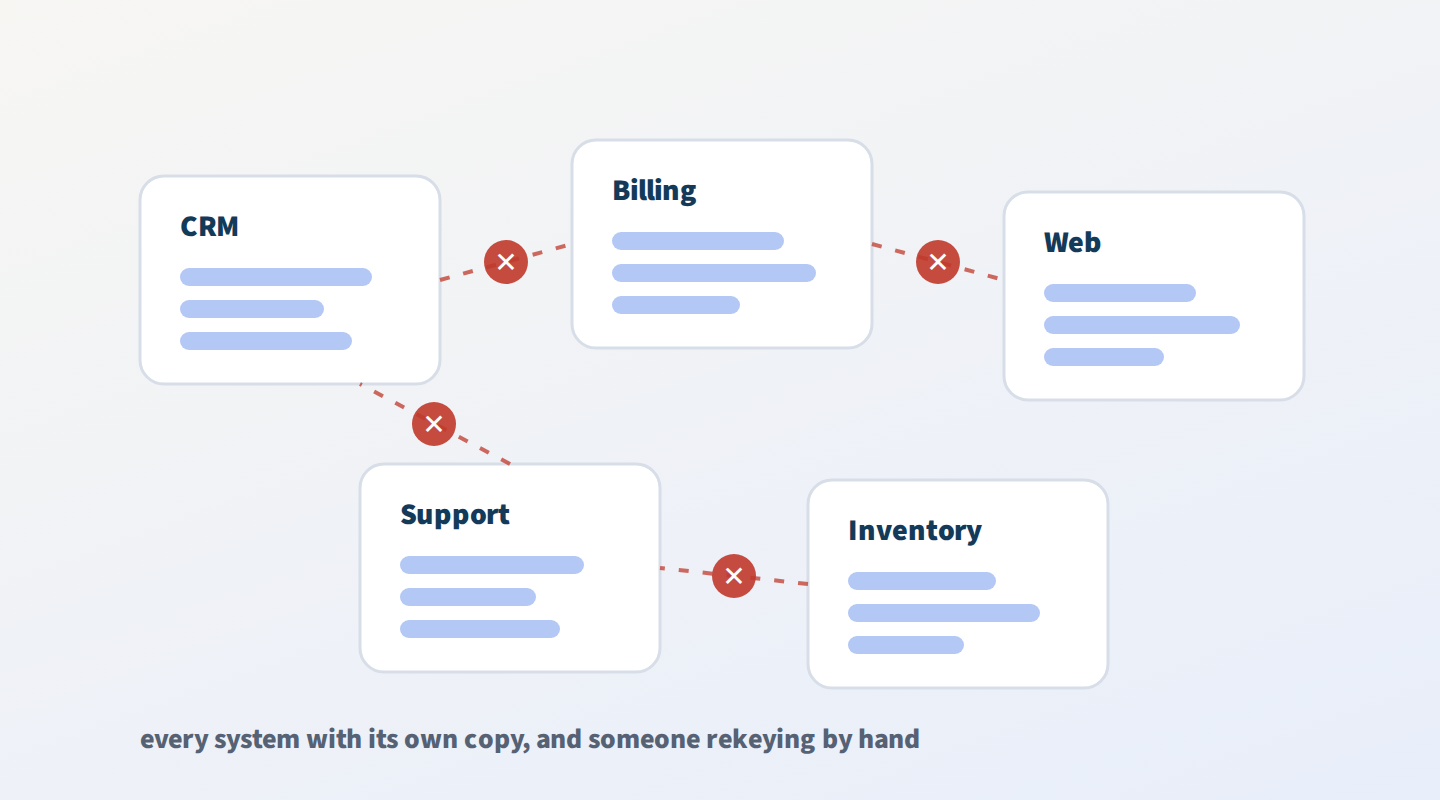
For DSC, enterprise integration is not only about creating an API or syncing two platforms. It means connecting systems, applications, data, users, workflows and channels as part of one digital ecosystem.
That work belongs to Connect, one pillar in our Build, Connect, Grow and Operate model:
Step 1 · Build
Build
The base everything else connects to.
Step 2 · Connect
Connect
The layer that keeps the ecosystem coordinated.
Step 3 · Grow
Grow
Measurable growth on reliable data.
Step 4 · Operate
Operate
The ecosystem gets measured, maintained and evolved.
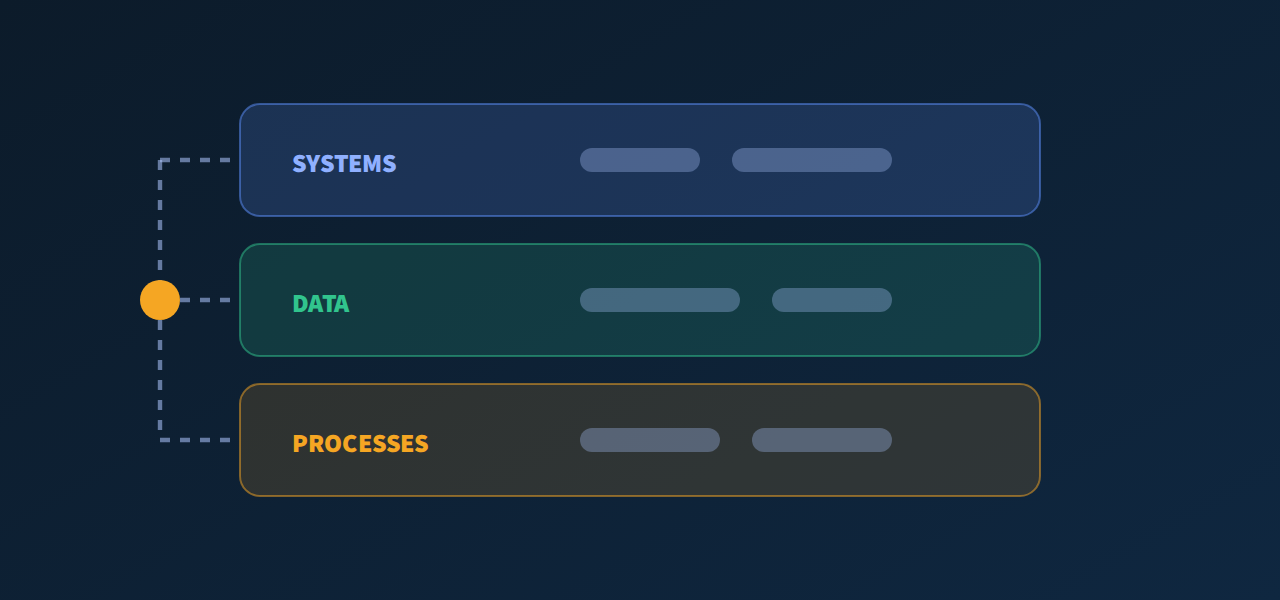
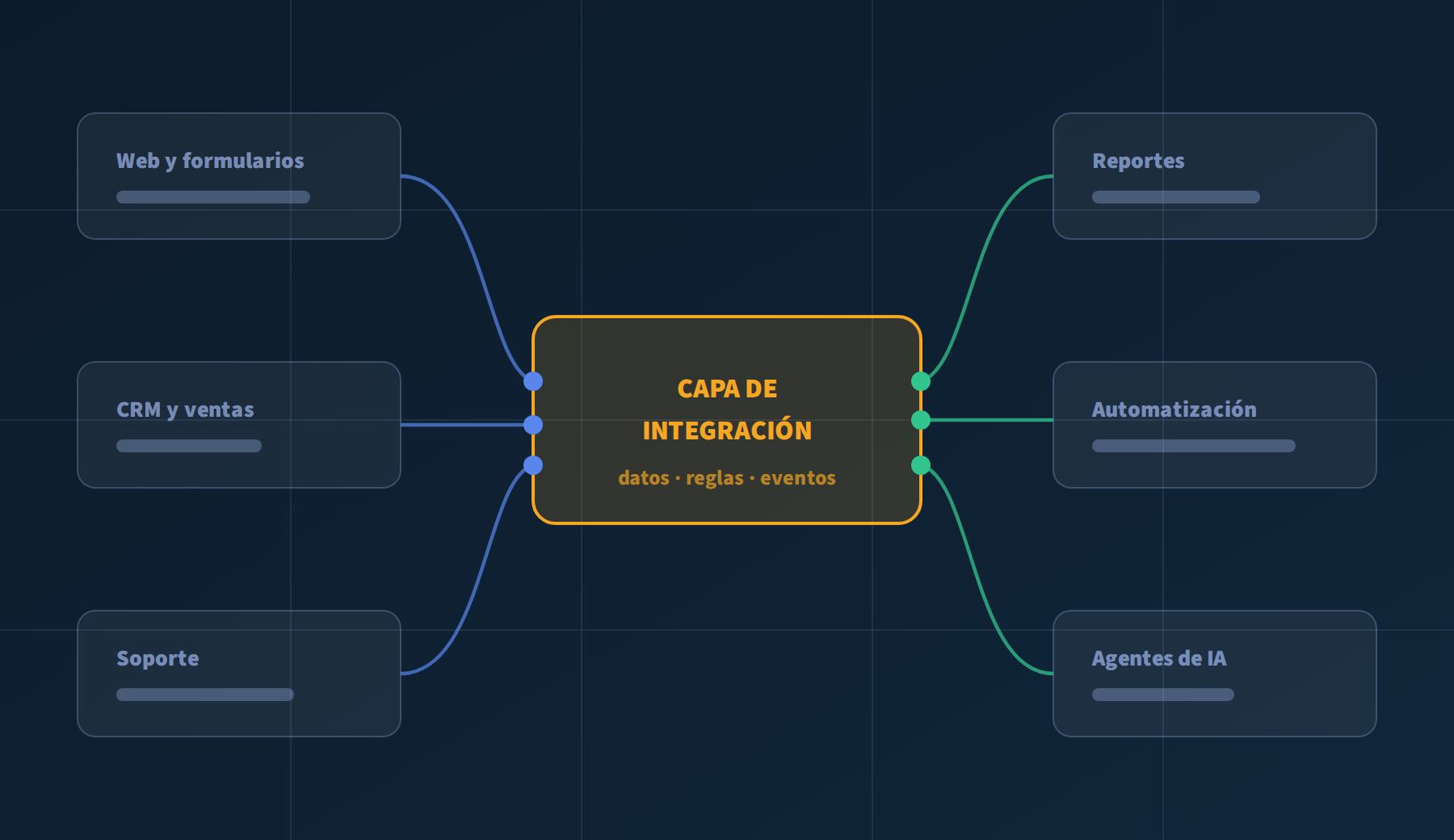
Information sources, internal workflows and business systems to reduce duplication, improve traceability and organize data flow. When the job is moving data between systems with rules of their own, we solve it with a data integration layer.
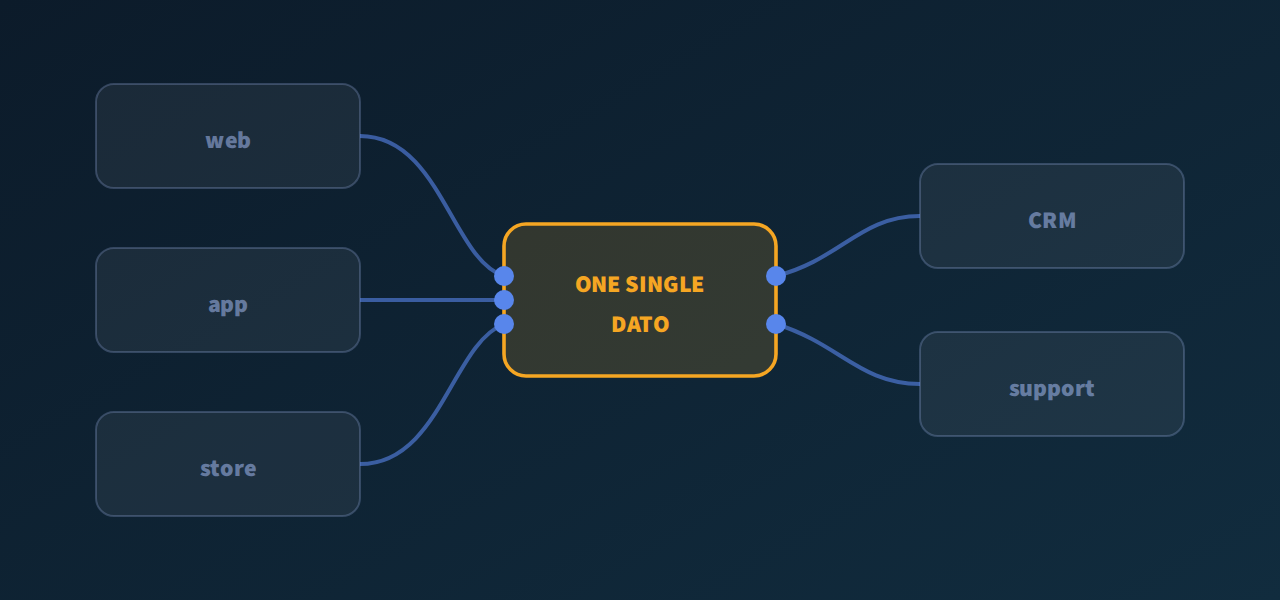
Forms, websites, apps, CRM, ERP, ecommerce, payment gateways, messaging and support as functional categories. The approach is not to promise a universal connection, but to assess workflows, data and rules before defining the architecture.
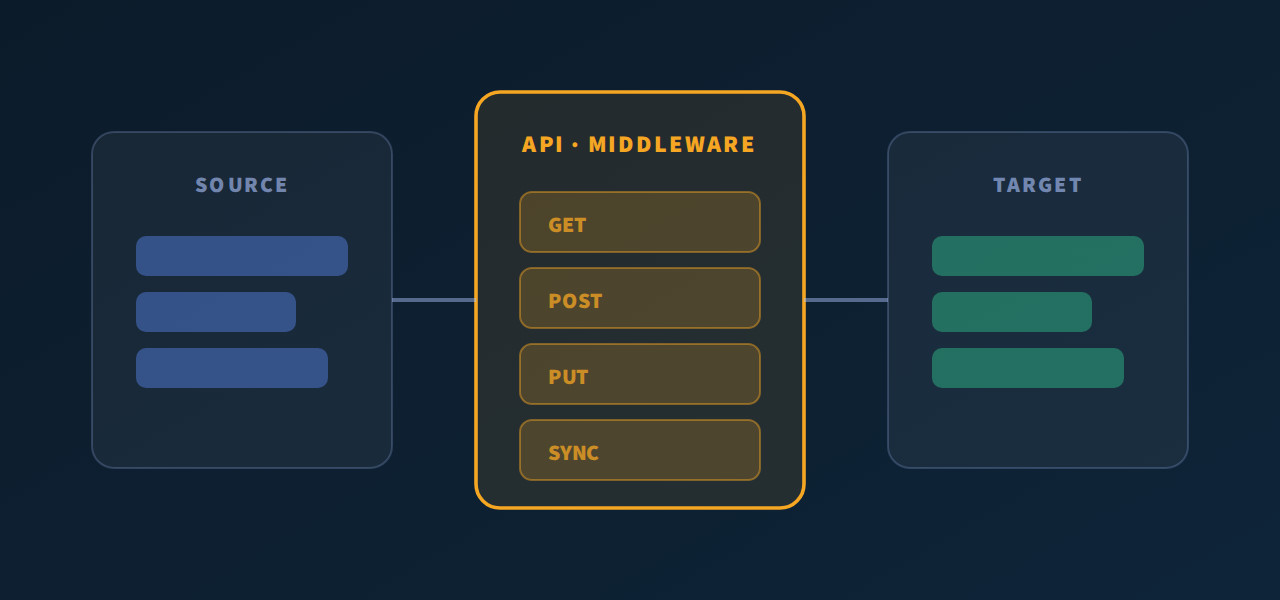
Layers that transform data, control rules, protect access or coordinate services that were not created to work together. See how we handle API integration between your tools and back-office process automation.
When the goal is to remove a handoff your team does by hand, see our workflow automation services.
Which systems exist and why they are used.
Which data is needed to operate, sell, support and decide.
Which workflows depend on manual work.
Which tools should remain active.
Which connection unlocks more value without creating unnecessary debt.
DSC can show capability through its own assets and internal systems, without depending on external client names.
We are probably not the best fit if the goal is only a basic website chosen on price, an initial online presence without operational complexity or a one-off solution. A corporate website that has to connect to your operation is another matter: that we build, and we run it afterwards.
The next step is not asking you for a fixed list of integrations. It is reviewing what is happening across your business, operations, data, channels, marketing and systems to identify real opportunities.
Book a free assessmentIt is connecting systems, applications, data, workflows and channels to operate with less friction and better information. At DSC we also look at business, marketing, support, operations and growth.
If your team copies data between tools, does not trust reports or loses context between marketing, sales and support, there is probably an integration opportunity.
Not necessarily. Sometimes it is better to connect what already exists; other times it is better to replace a piece when technical debt is higher than the benefit of keeping it.
An API exchanges information. Middleware transforms or coordinates data. Integration decides what should connect, why, under which rules and how it improves operations.
List your systems, which data is copied manually, which reports take too long, which teams work with different information and which workflow breaks most often.