Build
Build
Custom software, apps, platforms and portals that don't exist yet and your operation needs.
Software development →Build
What's included
- Custom software
- Web apps and platforms
- Mobile apps
- Advanced WordPress

Software, integrations, data, AI and marketing under one roof. We don't hand over a platform and walk away: we leave it running and we keep operating it with you.
The problem
It rarely starts with a crisis. It starts with a spreadsheet someone maintains by hand and a process that only works when a specific person is available. Months later, that friction is the ceiling of your operation.
The same client shows up in the CRM, on the website and in a separate database, and the three versions don't match. Every report starts with reconciling instead of deciding.
What should be automatic runs on reminders and copy-paste. It works until someone goes on vacation.
The website captures, email communicates and operations delivers, each with its own information. Your client notices before you do.
What we do
The easy answer would be to start from scratch. It's rarely the right one: what you already use is usually fine, what's missing is for the pieces to talk. First we look at what you have running and where the flow breaks. Then we build only what's needed for the whole to work as a system.
That whole —software, data, users, channels and operation as one thing— is what we call a connected system: the difference between having tools and having a system.
The model
Build, Connect, Grow and Operate are usually hired separately, from different vendors who then can't agree. Here they're the same team.
Build
Custom software, apps, platforms and portals that don't exist yet and your operation needs.
Software development →Build
Grow
Email marketing, automation, SEO and analytics on real data, not on estimates.
Growth marketing →Grow
Connect
Systems, users, data, roles, payments and validations wired together so there is a single version of the truth.
Integration →Connect
Operate
Support, improvements, AI agents and ongoing work so the system stays alive after launch.
Application support →Operate
Artificial intelligence
We do not sell «AI projects». We put AI where it takes work off your team and leave it out where a well-written rule is cheaper. These are the four ways we use it today, with clients and in our own operation.
The process held together today by copying and pasting between tools. AI makes sense of whatever arrives unstructured —an email, a PDF, a message— and the rules do the rest.
See workflow automation →An agent takes the task, carries it out inside your systems and flags anything out of the ordinary. Not a chatbot that answers: work that stops being done by hand.
See AI agents →Custom software where the model is one more component, not the product. We pick the model by task and decide with you what information leaves your house and what does not.
See AI applications →More and more customers ask ChatGPT or Gemini first. We work so your company is the source those answers mention, not the one that never shows up.
See answer engine optimization →Proof
The fastest way to judge whether we can do this isn't reading us. It's opening what we've built and watching it work.
Website, apps published on both stores, e-learning, event management, certificates, support and campaigns — all on a single user base. We built it and we still run it.
Cardreen, PMS Core and AgentEngine aren't demos. They're the systems we work in daily.
Support, email, meeting notes and follow-up handled by agents working inside our own workflow.
Fit
We'd rather say it here than on the third call.
Real users, processes already running and a team that needs all of it to stop being manual. If what you need is a basic, low-cost site to get by, there are faster and cheaper options than us; if what you need is a corporate website wired into your operation, that we do build.
They're usually two different vendors, and accountability dissolves in the handover. Here it's the same team. If you only need a fixed scope delivered and the vendor gone, a specialized shop will be cheaper.
We also don't take work we couldn't run afterwards. If you're looking for media buying, licenses or a one-off delivery with no continuity, we're not the right vendor.
We're not here to invent your operation: we're here to connect the one you already have and build what it's missing on top.
Who's behind this
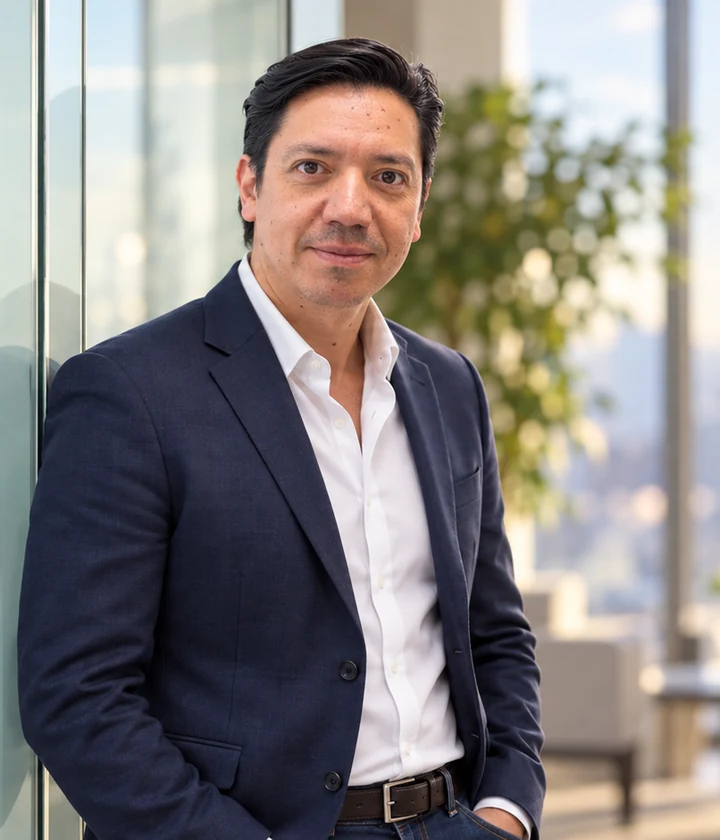
"The systems on this page were built by us and are run by us."
DSC is led by Helmunt Hernández, and leading here means being inside the work: neither the technical side nor the day-to-day operation gets handed off. With us you don't assemble a puzzle of vendors: software, integrations, data, AI and marketing are planned and delivered under one way of working, by a team of specialists backed by our own AI agents. One point of contact, one party accountable for making it work. And when you call, you talk to the person making the decisions, not to a commercial go-between.
Assessment
If your organisation already has an active operation and needs to bring technology, data or growth channels together, the first step is understanding what you have and where the bottleneck is. That's the assessment, and it's free.
You'll answer a few questions about your operation and we'll come back to you with the assessment.
Rather see how we work first? Look at the systems we're running.
Moving from disconnected tools to a system where data, processes and channels talk to each other. It isn't replacing everything: it's connecting what already works and building what's missing.
We build and run digital ecosystems: the software your operation needs, the integrations between what you already use, the marketing that brings demand and the support that keeps it running. Four fronts, one team.
Both, and that's the difference. A system nobody maintains degrades within months, so we prefer to stay accountable for it over time.
Almost never. We start by connecting what already works, and build custom only when the process that sets you apart is the one no off-the-shelf tool respects.
With a free assessment. You tell us what you have today and where the friction is, and we tell you what we would do and in what order. If a proposal follows, scope, timelines and terms are in writing before we start.